The short answer
You may need a new air conditioner if your system runs nonstop without cooling the house, needs frequent repairs, or your home has no central cooling at all. AirCore inspects your home's cooling needs, ductwork, and electrical system, then gives you a written quote that explains your repair and replacement options.
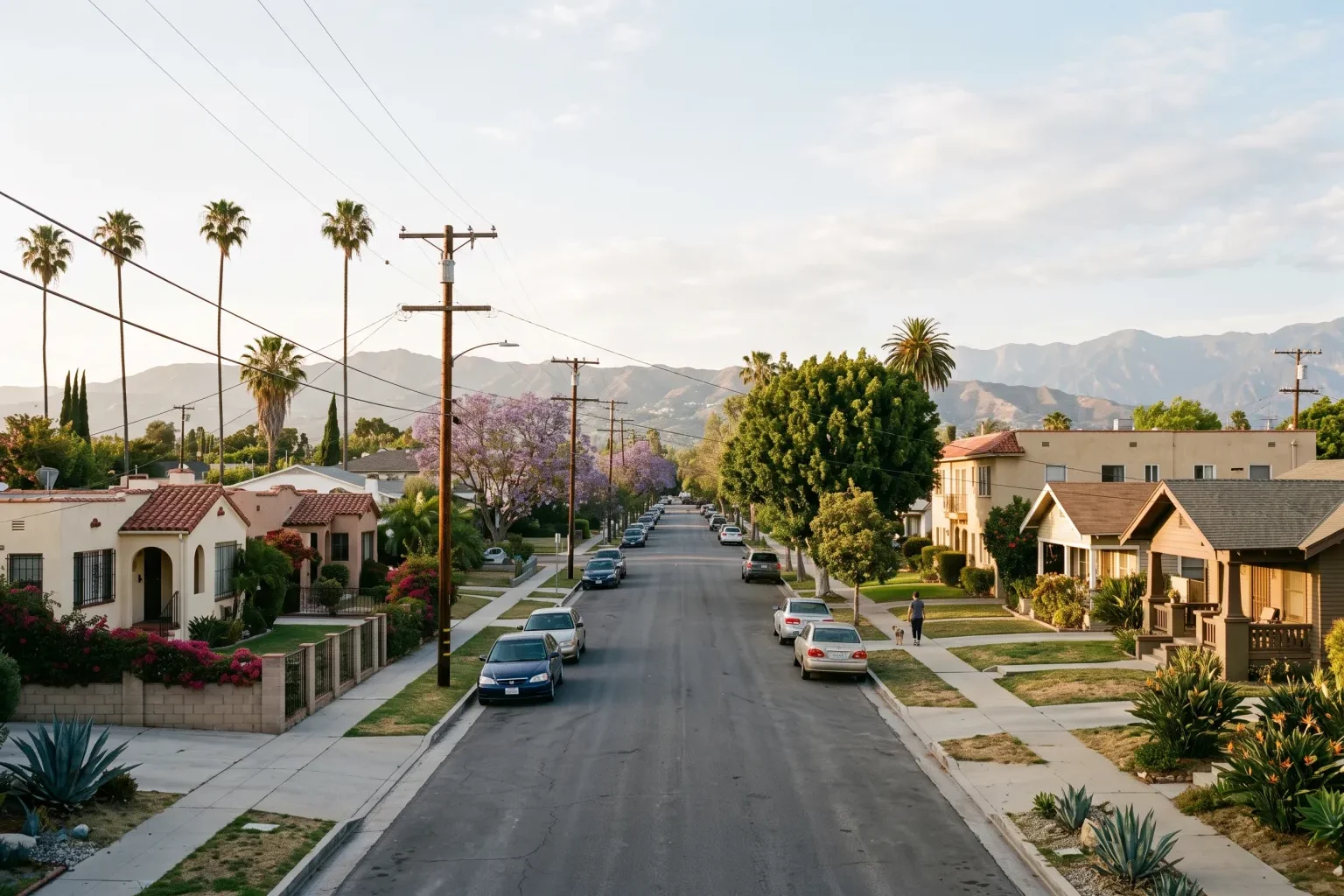
A new air conditioner is a big decision, and in Los Angeles the right choice depends a lot on where you live. A home in an inland valley that bakes through summer afternoons needs something different than a house a few miles from the coast. AirCore HVAC Repair Service installs central air conditioners, heat pumps, and ductless systems for homeowners across Los Angeles and nearby cities. This page covers how to tell when installation makes sense, what we look at before recommending equipment, how to weigh repair against replacement, what drives the cost of a project, and what to expect from the first visit through the final walkthrough.
Signs It May Be Time for a New AC
Air conditioners rarely fail without warning. Watch for these signs, especially heading into summer or a fall Santa Ana stretch, when hot, dry spells can push an aging system past its limit.
One of these signs on its own doesn't always mean you need a new system. A refrigerant leak or a failed capacitor can cause similar symptoms and may be fixable. An inspection tells you which situation you're in.
- The system runs constantly, but rooms never reach the thermostat setting.
- Some rooms stay noticeably warmer than others, even with the vents open.
- You need repairs regularly instead of rarely.
- Your summer electric bills keep climbing even though your habits haven't changed.
- The outdoor unit makes grinding, screeching, or loud clanking noises.
- Ice forms on the refrigerant lines or the indoor coil.
- The house feels clammy or stuffy even when the air coming out of the vents is cool.
- Your home has no central cooling, and recent summers have been hard to get through.
What We Check Before Recommending a System
We don't size a system by square footage alone. Two homes of the same size can need very different equipment. Insulation, windows, and sun exposure all matter, and so does location. A house in a hot inland valley needs more cooling than one near the ocean, where summers are milder.
We also ask how you use the house. Which rooms feel worst, whether anyone works from home, whether anyone is sensitive to dust or allergens, and how long you plan to stay all affect which system makes sense.
- Cooling load: a room-by-room look at insulation, window size and orientation, ceiling height, and air leaks.
- Ductwork: leaks, crushed or disconnected runs, and poor insulation in the attic. We also check whether the ducts are sized for the airflow a new system needs.
- Electrical: panel capacity, breaker size, and wiring to the outdoor unit. This matters most if you're switching to a heat pump.
- Existing equipment: the furnace or air handler, coil, and refrigerant lines, and whether they can work with new equipment.
- Placement: space and clearance for the outdoor unit, noise near bedrooms or neighbors, and access for future service.
- Thermostat and controls: whether your current thermostat works with the new system or should be replaced.
Repair or Replace: Your Options
If your current system can be repaired at a reasonable cost and still has useful life left, we'll tell you. Repair often makes sense when the problem is a single part, the system is relatively young, and it has cooled the house well until now.
Replacement usually makes more sense in these cases: - The system is older. - It uses an outdated refrigerant that is costly to service. - It needs a major component, such as a compressor. - It has struggled for several summers. When replacement is the right call, these are the main options.
We'll explain the tradeoffs of each option for your home rather than pushing one answer.
- Central AC replacement: a new outdoor condenser and matching indoor coil, connected to your existing furnace and ducts.
- Heat pump system: one system that cools in summer and heats in winter. It's a good fit for Los Angeles's mild winters.
- Ductless mini-split: individual indoor units for homes without ducts, additions, converted garages, or rooms that never cool well.
- Full system replacement: a new outdoor unit, indoor air handler or furnace, and coil installed together, so every part is designed to work as a matched set.
What Affects the Cost of AC Installation
We quote every installation for the specific home. These are the main factors:
Your written quote spells out what's included, so you can compare it line by line.
- System type and size, based on your home's cooling load.
- Efficiency rating: higher-SEER2 equipment usually costs more upfront and uses less electricity.
- Ductwork condition: sealing, repairs, or new duct runs add work.
- Electrical upgrades, if your panel or circuit can't support the new equipment.
- Installation access: tight attics, crawl spaces, rooftop units, and long refrigerant line runs take more time.
- Whether the furnace or air handler is replaced at the same time.
- Permits and inspections required by your city.
- Add-ons such as a new thermostat, zoning, or upgraded air filtration.
Rebates and Rules to Know in Los Angeles
LADWP residential electric customers may be able to get a Consumer Rebate Program rebate on a qualifying heat pump system. The amount depends on the unit's SEER2 and HSPF2 ratings. You apply after the equipment is purchased and installed, within 12 months of purchase. Many homes outside the City of Los Angeles are served by Southern California Edison instead, so the rebates available to you depend on which utility serves your address. We confirm the current offer for your address before we include it in a quote.
The federal Energy Efficient Home Improvement Credit (25C) applied only to qualifying heat pumps placed in service before December 31, 2025. You can't claim it for a new installation after that date.
Your project may also include replacing a gas furnace. South Coast AQMD Rule 1111 limits NOx emissions from fan-type central furnaces sold and installed in this region, and the district has been amending the rule toward zero-emission requirements. The district sets and revises the compliance dates, so we check the current rule when planning any furnace replacement.
How an Installation Visit Works
Here's what to expect from start to finish:
Many straightforward replacements take about a day. Projects that include ductwork or electrical upgrades can take longer, and we'll give you the expected timeline before work begins.
- Schedule an in-home assessment at a time that works for you.
- A technician inspects your current system, ducts, and electrical, and talks with you about comfort problems and goals.
- You get a written quote with equipment options and what each one includes.
- We pull permits where your city requires them and schedule the installation.
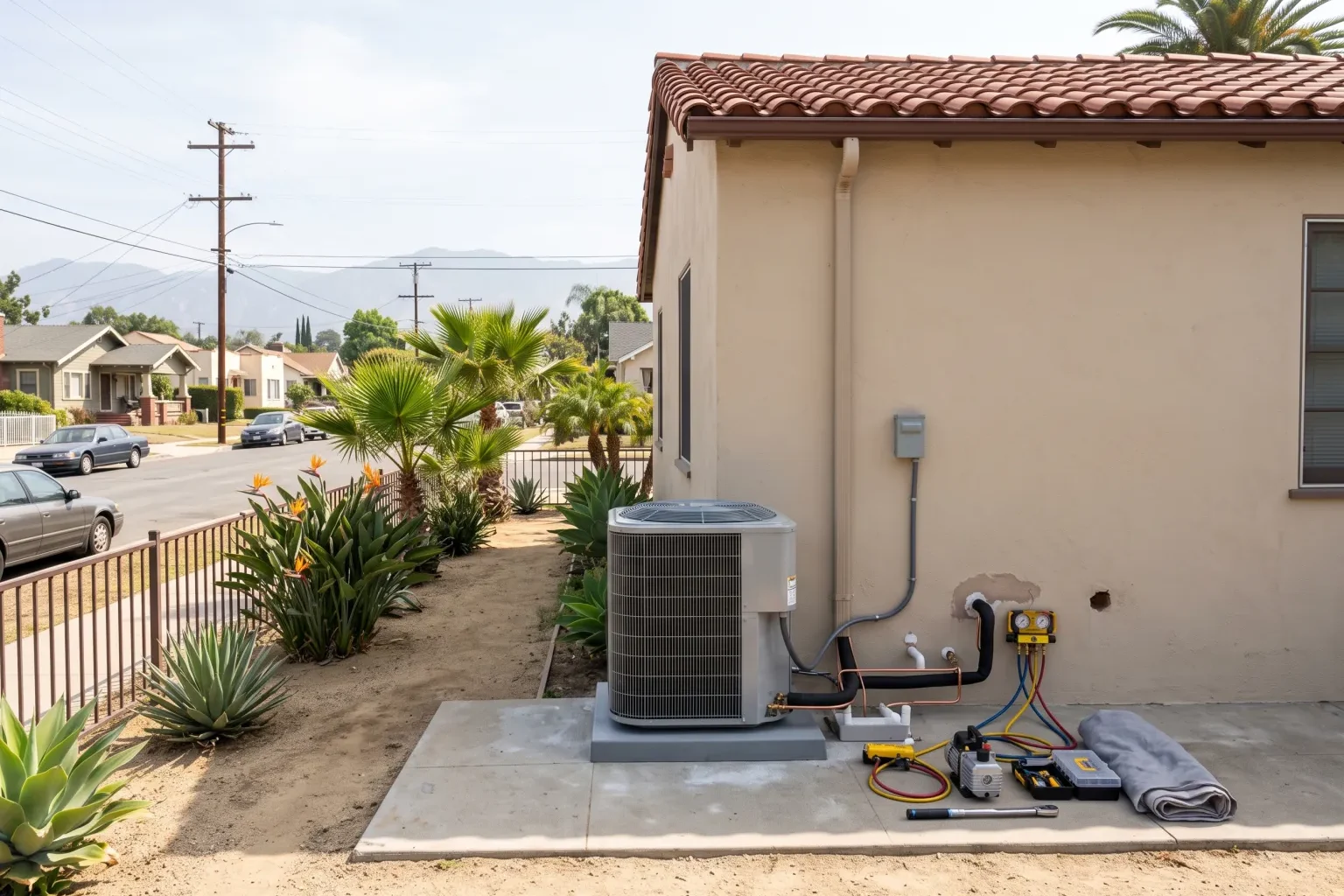
- On installation day, the crew protects floors and work areas, removes the old equipment, and installs and connects the new system.
- We test refrigerant charge, airflow, and temperature, and set up your thermostat.
- Before we leave, we clean up, show you how to operate the system, and explain how to change the filter.
- If your permit requires a city inspection, we arrange it.
AC Installation by city
- AC Installation in Inglewood
- AC Installation in Culver City
- AC Installation in West Hollywood
- AC Installation in Vernon
- AC Installation in Huntington Park
- AC Installation in Beverly Hills
- AC Installation in Maywood
- AC Installation in Hawthorne
- AC Installation in Bell
- AC Installation in Cudahy
- AC Installation in South Gate
- AC Installation in Gardena