
The short answer
A ductless mini-split is a good fit when you need heating and cooling in rooms that have no ducts, rooms your current system can't keep comfortable, or a home where adding ductwork isn't practical. We assess the space, electrical capacity, and mounting locations first, then recommend a system sized for the rooms you actually use.
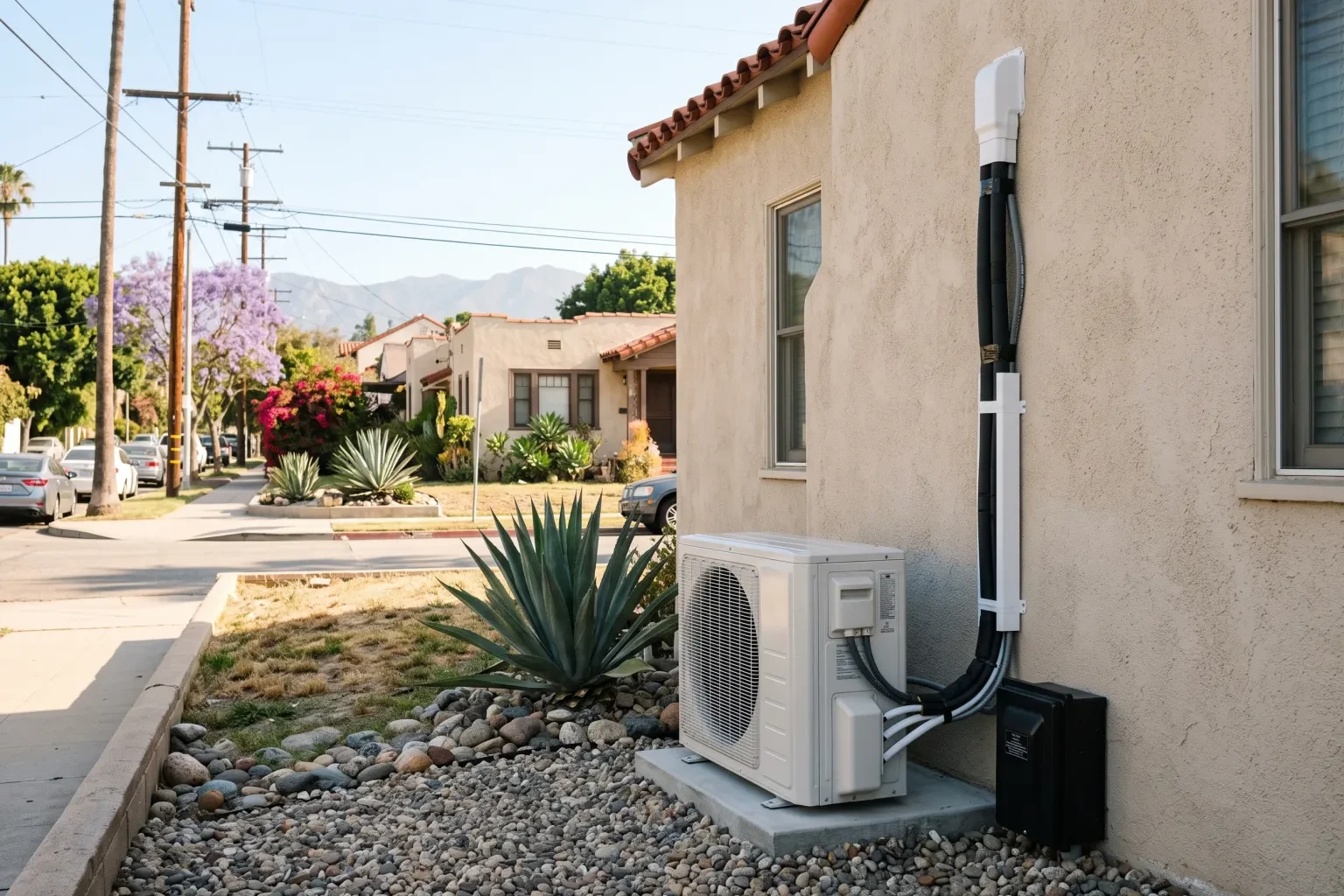
A ductless mini-split heats and cools individual rooms without ductwork. An outdoor unit connects through a small wall opening to one or more indoor heads, and each head runs on its own setting. For many Los Angeles homes, that solves real problems: an older house that was never built with ducts, a garage converted to a bedroom or ADU, a second-floor office that bakes every afternoon, or a central system that leaves one end of the house uncomfortable. AirCore HVAC Repair Service installs mini-splits in Los Angeles and nearby cities. This page covers when a mini-split makes sense, what we look at before recommending one, your options if you already have one, what shapes the cost, and how an installation visit works.
Signs a Ductless Mini-Split Is the Right Fit
Los Angeles has dry summers and mild winters, but conditions vary a lot by neighborhood. Inland areas and the valleys run much hotter in summer than homes near the coast, and fall Santa Ana winds can bring hot, dry spells late in the season. A room that feels fine in Santa Monica in September can be unbearable in the San Fernando Valley. Mini-splits handle that kind of uneven demand well because each zone is controlled separately.
These situations usually point toward a ductless system:
- Your home has no ductwork, or the existing ducts are damaged, undersized, or hard to reach.
- You've added living space, such as a garage conversion, ADU, sunroom, or finished attic, that your current system doesn't serve.
- One or two rooms are always hotter or colder than the rest of the house.
- You rely on window units or portable air conditioners and want something quieter that doesn't block a window.
- You want to cool only the rooms you use instead of running a whole-house system.
- You're moving away from a gas furnace and want an electric heat pump for both heating and cooling.
What We Check Before Recommending a System
A mini-split only works well if it's matched to the space and installed in the right spots. Before we suggest equipment, we look at how the rooms are actually used and what the house can support.
If a mini-split would replace a gas furnace, we'll talk through that too. South Coast AQMD Rule 1111 limits NOx emissions from natural-gas central furnaces sold and installed in this region, and the district has been amending it toward zero-emission requirements. Compliance dates are set and revised by the district, so anyone planning a furnace replacement should check the current rule. It's one more reason some homeowners choose a heat pump now.
- Room size, ceiling height, window area, sun exposure, and insulation, which together determine how much capacity each zone needs.
- Indoor head locations that give good airflow without blowing directly on beds or seating.
- Outdoor unit placement, including clearance, noise toward neighbors, drainage, and access for service.
- The path for refrigerant lines, wiring, and condensate drainage between indoor and outdoor units.
- Electrical panel capacity and whether a new dedicated circuit is needed.
- Any existing heating or cooling equipment and how the new system will work alongside it.
Repair vs. Replace: Options If You Already Have a Mini-Split
If you already have a ductless system that isn't keeping up, replacing it isn't always the answer. Many problems come from dirty filters, clogged condensate drains, refrigerant leaks, failed sensors, or a faulty control board. Those are often repairable, and we'll tell you when a repair makes sense.
Replacement is worth considering when the system is old and needs a major component like a compressor, when repairs keep coming back, when parts are hard to get, or when the original system was undersized for the space. Sometimes the better option is somewhere in between: keeping a working outdoor unit and adding or changing indoor heads, or adding a second system for a new addition rather than overloading the first one. We'll explain the tradeoffs so you can decide based on the condition of your equipment and your plans for the house.
What Affects the Cost of Installation
Every mini-split installation is different, so we quote after seeing the home. These are the main factors:
- Number of zones: a single-room system costs less than a multi-zone setup serving several rooms.
- Equipment capacity and efficiency rating: higher SEER2 and HSPF2 ratings usually cost more up front but use less electricity.
- Indoor unit style: wall-mounted heads are most common; ceiling cassettes, floor consoles, and concealed ducted units involve more work.
- Line set length and routing: long runs, multiple floors, or lines hidden inside walls add labor and materials.
- Electrical work: a new circuit or panel upgrade adds to the job.
- Outdoor mounting: a ground pad, wall bracket, or roof location each has different requirements.
- Removal of old equipment, such as window units or an existing system.
How an Installation Visit Works
It starts with an in-home assessment. We walk through the rooms you want to condition, take measurements, check your electrical panel, and look at where indoor and outdoor units can go. Then we go over your options, including single-zone versus multi-zone and equipment choices, and give you a written quote.
On installation day, we protect floors and furniture, mount the indoor heads and outdoor unit, drill the small wall opening for the line set, run the refrigerant lines, wiring, and condensate drain, and make the electrical connections. We pressure-test and evacuate the refrigerant lines before releasing refrigerant, then start the system and check that each zone heats and cools properly.
Before we leave, we show you how to use the remote or app, set schedules, and clean the filters. We'll also explain what routine maintenance the system needs to keep running efficiently.
On rebates: if LADWP provides your electricity, you may qualify for its Consumer Rebate Program on a qualifying heat pump system, with the amount based on the unit's SEER2/HSPF2 rating. You apply after the equipment is purchased and installed, within 12 months of purchase. Many homes outside the City of Los Angeles are served by Southern California Edison instead, and available rebates depend on which utility serves your address. We confirm the current offer before including it in any quote.