The short answer
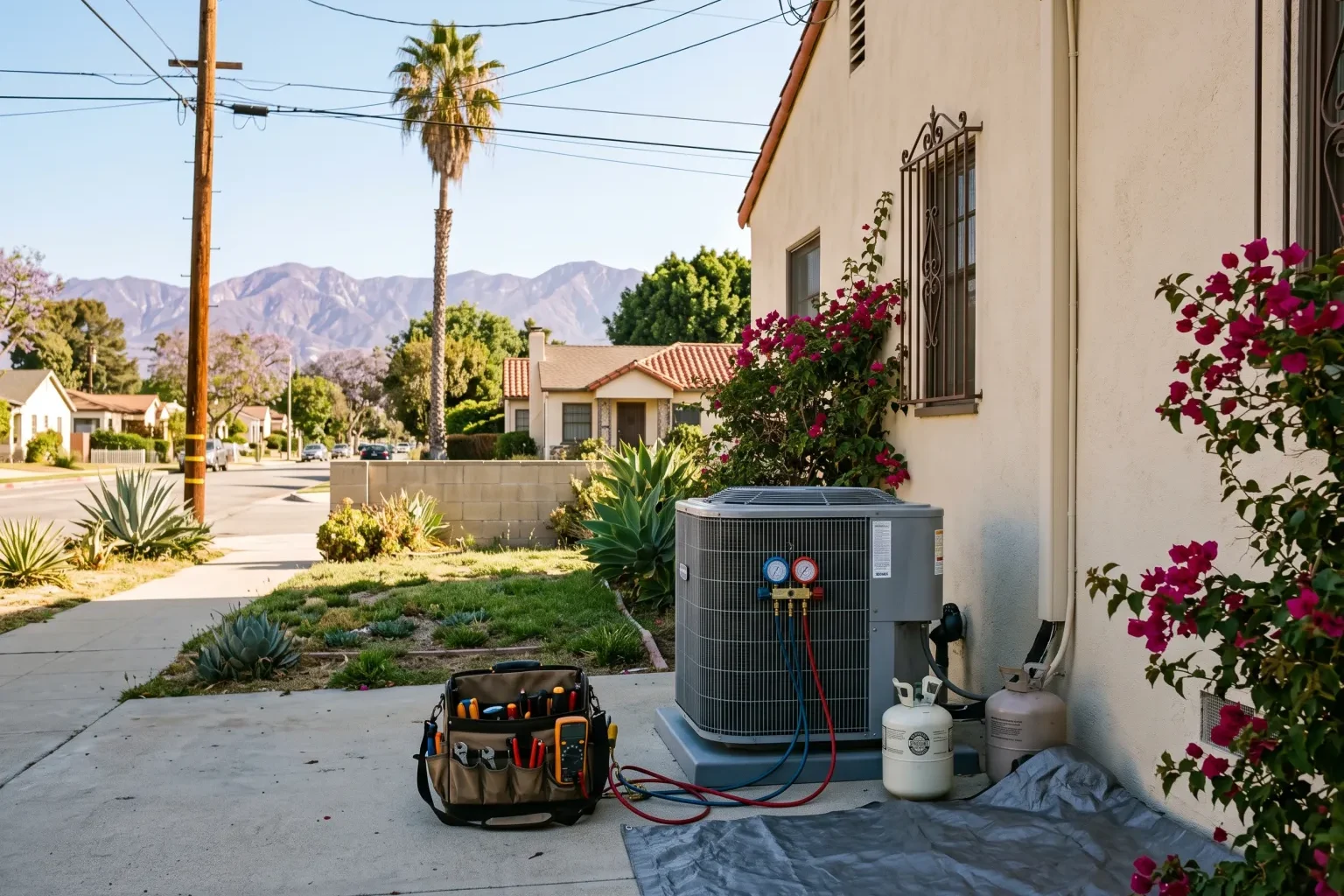
HVAC maintenance is a top-to-bottom inspection, cleaning, and test of your air conditioner, heat pump, or furnace that catches small problems before they become breakdowns. In Los Angeles, where inland summers run hot and Santa Ana winds blow dust into equipment, a yearly visit for each system you use is a sensible minimum.
Most heating and cooling breakdowns don't happen out of nowhere. A clogged filter, a weakening capacitor, or a drain line slowly filling with sludge can go unnoticed for months before the system finally quits, often on the hottest afternoon of the year. Regular maintenance catches those problems while they're still small and easy to fix. AirCore HVAC Repair Service maintains central air conditioners, heat pumps, and gas furnaces for homeowners in Los Angeles and nearby cities. This page covers the signs your system is overdue for service, what we check during a visit, how we help you weigh repair against replacement, and what to expect from start to finish.
Signs Your System Needs Maintenance
Los Angeles has a Mediterranean climate with dry summers and mild winters, but that doesn't mean your equipment gets an easy ride. Inland neighborhoods and the valleys run much hotter in summer than areas near the coast, so air conditioners there work long hours. Fall Santa Ana winds bring hot, dry spells and push dust and debris into outdoor units.
If it's been more than a year since your last tune-up, or you notice any of the following, it's time to schedule one:
- Rooms take longer to cool or heat than they used to
- Airflow from the vents feels weak
- The system turns on and off in short, frequent cycles
- New rattling, buzzing, squealing, or grinding noises
- Musty, burning, or dusty smells when the system starts
- Water pooling near the indoor unit or furnace
- Ice on the refrigerant lines or indoor coil
- Energy bills climbing even though your habits haven't changed
- More dust around the house than usual
What We Check During a Maintenance Visit
A maintenance visit is more than a quick look and a filter swap. Our technician works through the whole system, indoors and out, and makes a note of anything that's wearing out so you're not surprised later.
If your home has a gas furnace, we pay close attention to the burners, flame, and venting. Combustion problems can affect safety, and we'll tell you plainly if we find one.
- Air filter condition and fit
- Thermostat settings and operation
- Electrical connections, capacitors, and contactors
- Outdoor condenser coil and fins, cleaned as needed
- Indoor evaporator coil, where accessible
- Condensate drain line and pan, cleared to prevent overflow
- Refrigerant operating pressures and the temperature difference across the coil
- Blower motor and wheel
- Furnace ignition, burners, flame sensor, visible heat exchanger condition, and venting
- Safety controls and limit switches
- Visible duct connections for leaks or disconnected sections
Repair or Replace?
Sometimes a maintenance visit turns up a part that's failing. Usually that's a straightforward repair, like a worn capacitor, a pitted contactor, a dirty flame sensor, or a clogged drain. When the problem is bigger, such as a leaking coil, a failing compressor, or a damaged heat exchanger, the question becomes whether to repair or replace. We lay out both options and the trade-offs so you can make the call.
We look at the age and overall condition of the equipment, how often it has needed repairs, whether its refrigerant is still practical to service, how well it keeps the house comfortable, and how much of the system would need to change.
If you're considering replacing a gas furnace, know that South Coast AQMD Rule 1111 limits NOx emissions from natural-gas fan-type central furnaces sold and installed in the Los Angeles region. The district has been amending the rule toward zero-emission requirements and sets and revises the compliance dates, so check the current rule before you plan.
Many homeowners use a replacement as a chance to look at heat pumps. LADWP residential electric customers can apply for Consumer Rebate Program rebates on qualifying heat pump systems, with the amount based on the unit's SEER2/HSPF2 rating. The application is filed after the equipment is purchased and installed, within 12 months of purchase. Many homes outside the City of Los Angeles are served by Southern California Edison instead, so available rebates depend on your utility. We confirm the current offer before quoting it. The federal 25C tax credit for heat pumps is not available for new installations after December 31, 2025.
What Affects the Cost of Maintenance
We give you a clear quote before any work begins. The cost of a maintenance visit depends on a few things:
Nothing beyond the agreed scope gets done without your approval.
- How many systems you have and what type (air conditioner, furnace, heat pump, or multiple zones)
- Where the equipment sits, such as an attic, crawlspace, closet, or rooftop, and how easy it is to reach
- How long it's been since the last service, since heavily soiled coils or clogged drains take more time
- Whether the visit covers cooling, heating, or both
- Parts or materials needed, like filters or a replacement capacitor
- Any repairs you choose to approve during the visit
How a Maintenance Visit Works
Here's what happens from the time you contact us to the time our technician leaves:
Many homeowners schedule cooling maintenance in spring, before inland heat arrives, and a heating check in fall. If you rely on both, twice a year keeps each side ready for its season.
- Scheduling: tell us what equipment you have, where it's located, and any problems you've noticed.
- Walkthrough: the technician asks how the system has been behaving and looks at the thermostat and vents.
- Inspection and cleaning: we work through the checklist above, indoors and out.
- Findings: we explain what we found in plain terms and show you photos when that helps.
- Options: if something needs repair, we explain your choices before starting any work.
- Wrap-up: we run the system through a full cycle and confirm it's operating properly before we leave.