
The short answer
Duct cleaning makes sense when there's a clear reason: visible debris blowing from vents, pests, suspected mold, recent remodeling, or musty odors, not just because time has passed. AirCore inspects your ducts first, then cleans, repairs, or recommends replacement based on what we actually find.
Your ducts carry all the heated and cooled air in your home. Over time they collect dust, lint, pet hair, and construction debris. In Los Angeles they also pick up fine dust carried in during dry summers and fall Santa Ana winds. AirCore HVAC Repair Service cleans and inspects duct systems for homeowners in Los Angeles and nearby cities. Not every home needs duct cleaning on a set schedule, and we'll tell you if yours doesn't. When it does, we clean the whole system, not just the vents you can see. We also look for leaks, crushed runs, and disconnected joints, which often matter more than the dust itself.
Signs Your Ducts Need Cleaning
Duct cleaning makes sense when there's a specific reason, not just because a certain amount of time has passed. These are the situations where we usually recommend it:
Some symptoms point to a duct problem other than dirt. Leaking or disconnected ducts can cause rooms that stay hotter or colder than the rest of the house, weak airflow from certain vents, or a jump in energy use. Homes in the valleys and other inland areas lean hard on air conditioning in summer. Leaks there can cost real comfort on the hottest days.
- Visible dust or debris blowing out of supply registers when the system starts
- Dust settling on furniture and floors quickly, even soon after cleaning
- Recent remodeling, drywall work, or floor sanding while the system was running
- Signs of rodents or insects in the attic, crawlspace, or ducts, such as droppings or nesting material
- A musty smell when the heat or air conditioning runs
- Visible growth that looks like mold on registers, inside ducts, or around the air handler
- Moving into a home with an unknown maintenance history
- Heavy pet hair, or someone in the household who notices more irritation when the system runs
What We Check During a Duct Inspection
Every visit starts with an inspection. We want to know what's in the system and what condition it's in before we touch it. Where we can't reach a run directly, we use a camera to see inside.
We show you photos or video of what we find. If your ducts are reasonably clean and in good shape, we'll say so and skip the cleaning.
- Supply and return registers, grilles, and the boots that connect them to the ducts
- Main trunk lines and branch runs for buildup, debris, and pest activity
- Joints, seams, and connections for gaps or separation
- Flexible duct for kinks, crushing, sagging, or torn outer jackets and insulation
- The return plenum, blower compartment, and coil area, where dirt often collects
- Filter size, fit, and type, including whether air is slipping around the filter
- Signs of moisture or suspected mold, which we point out so you can decide on next steps
Cleaning, Repair, or Replacement
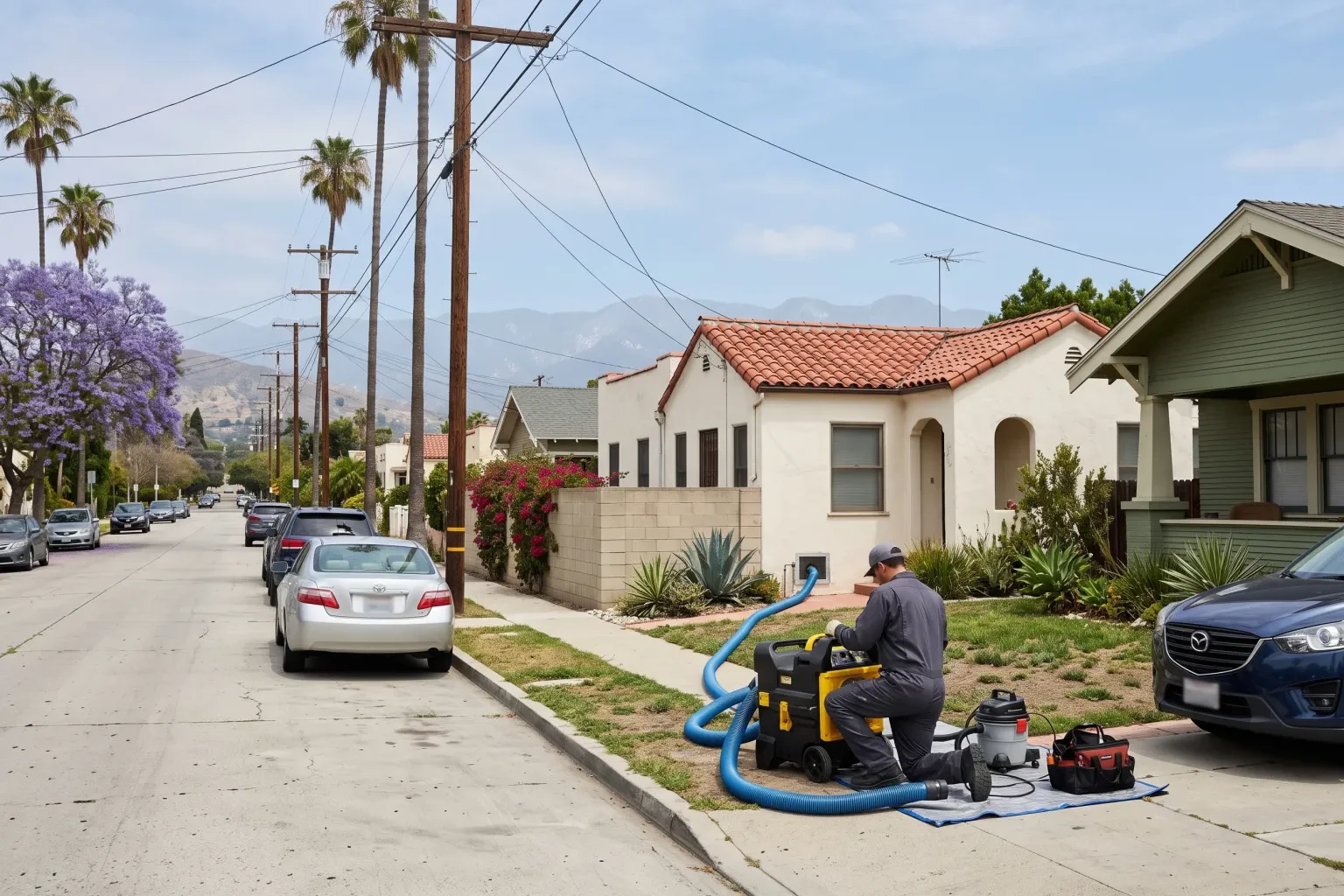
Cleaning works when the ducts are structurally sound and the problem is buildup. We use negative-pressure equipment to pull debris out while brushes or air whips loosen dust inside the ducts. The loosened dust goes into our collection unit instead of your living space.
Repair is the right call when specific sections are damaged. Common fixes include: - Resealing leaky joints with mastic or approved foil tape - Reattaching disconnected runs - Replacing a crushed or torn length of flex duct - Adding proper support so ducts don't sag Cleaning a badly leaking duct does little if it keeps pulling in dusty attic air.
Replacement makes more sense when much of the system is old, brittle, or poorly insulated. It also makes sense when contamination is beyond what cleaning can fix, such as pest damage throughout or flex duct with crumbling insulation. It's also worth considering when you replace your heating and cooling equipment. Ducts sized for an older system may need changes if you switch to a heat pump.
LADWP residential customers may qualify for rebates on qualifying heat pump systems. You apply after the equipment is installed. Homes served by Southern California Edison have different options, so we confirm what applies to your address. If you're replacing a gas furnace instead, regional air quality rules on furnace emissions are being revised. Check the current requirements before you choose equipment.
What Affects the Cost of Duct Cleaning
We give you a quote after we've seen the system, because duct jobs vary a lot from house to house. The main factors are:
We explain each part of the quote before work begins. Nothing is added without your approval.
- Size of the home and the number of supply and return vents
- How many heating and cooling systems and air handlers the home has
- Where the ducts run: attic, crawlspace, garage, or enclosed in walls and ceilings
- How easy the ducts are to reach, including tight attics and limited access points
- How much debris is present, and whether there's pest contamination or construction dust
- Type of duct, such as sheet metal, flex duct, or duct board, which are each cleaned differently
- Whether sealing, repairs, or section replacement are needed
- Add-ons such as blower or coil cleaning
How a Duct Cleaning Visit Works
We schedule an arrival window and come ready to protect your home. Before starting, we lay down floor coverings, turn the system off, and cover registers.
After the inspection, we walk you through what we found and what we recommend. If you approve, we connect our collection equipment to the system. Then we seal off registers and clean each run on both the supply and return sides. We also clean register covers and check the blower area.
When we're done, we put in a new filter or show you what size to buy. Then we restart the system and check airflow at the vents. Most single-system homes take part of a day. Larger homes or jobs with repairs take longer. Before we leave, we share photos of the results and note anything to watch, like an aging section of flex duct.
To keep ducts cleaner afterward: - Change filters on schedule. - Keep return grilles clear. - During remodeling, turn the system off or seal the vents.